Trauma & EMDR

Trauma
Trauma can affect the way we experience ourselves, our relationships, and the world around us. Experiences that feel overwhelming, threatening, or deeply distressing can sometimes leave a lasting impact, even long after the experience has ended. You may notice this through anxiety, emotional reactivity, difficulty trusting, feeling disconnected, or finding yourself responding to present situations through the lens of the past.
For clients who are interested in working more directly with distressing or traumatic experiences, I offer Eye Movement Desensitization and Reprocessing (EMDR), an evidence-based approach that can help the brain process experiences that may feel stuck or unresolved. See below for more information on EMDR.
What Is EMDR?

Eye Movement Desensitization and Reprocessing (EMDR) is a structured psychotherapy technique designed to help individuals process and recover from traumatic experiences and emotional distress. Developed by Francine Shapiro in the late 1980s, EMDR involves recalling distressing memories while simultaneously engaging in bilateral stimulation, such as guided eye movements, taps, or sounds. This dual-attention task is believed to help the brain reprocess traumatic memories and reduce their emotional intensity.
EMDR is based on the Adaptive Information Processing (AIP) model, which posits that traumatic memories can become "stuck" in the brain in a maladaptive state. EMDR facilitates the reprocessing of these memories so they can be integrated more adaptively, reducing psychological symptoms like anxiety, flashbacks, or avoidance.
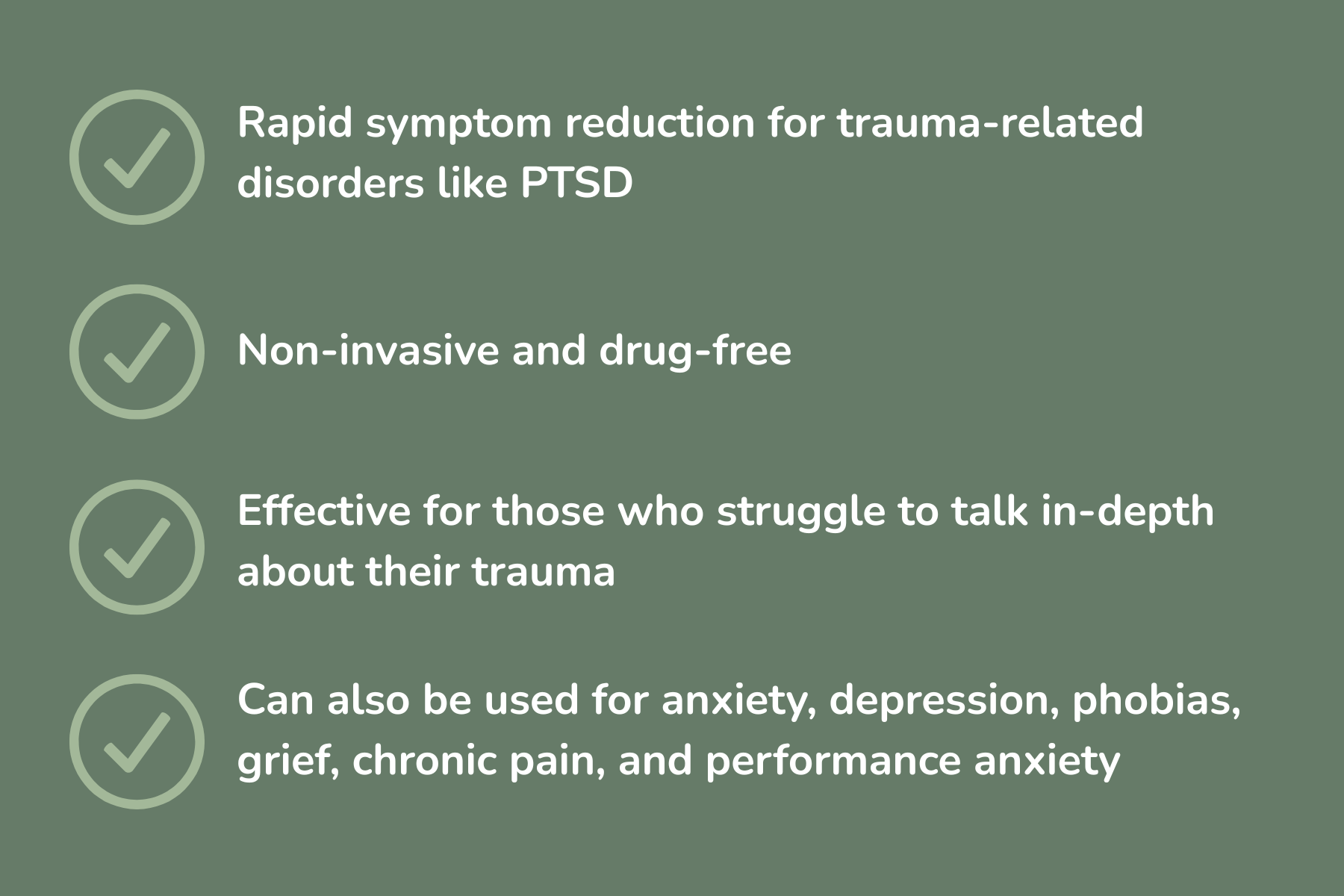
EMDR is a well-researched, first-line treatment for Posttraumatic Stress Disorder (PTSD), shown in multiple randomized controlled trials (RCTs) and meta-analyses to be as effective as—or sometimes more effective than— Cognitive Behavioral Therapy (CBT). A 2013 Cochrane review found EMDR significantly better than no treatment and comparable to trauma-focused CBT. It’s recommended by the World Health Organization (WHO), American Psychiatric Association (APA), and Department of Veterans Affairs (VA) for the treatment of PTSD. Some studies suggest it may achieve results in fewer sessions than CBT. Research is ongoing into its use for other conditions.
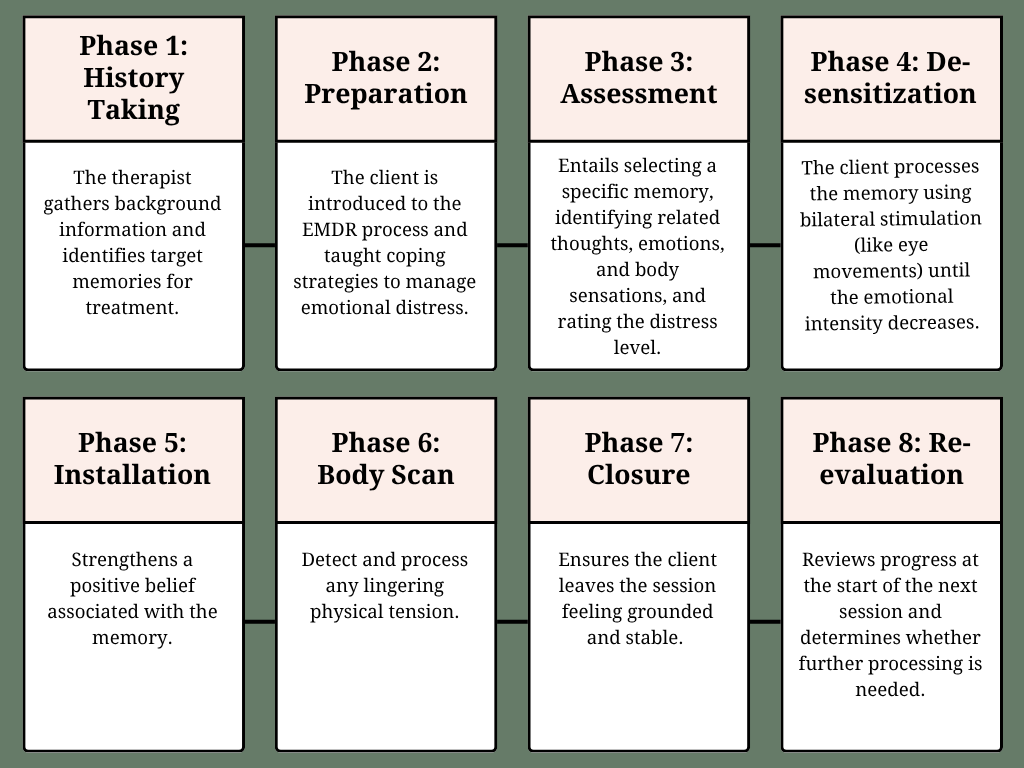
The 8 Phases of EMDR:
Benefits of EMDR